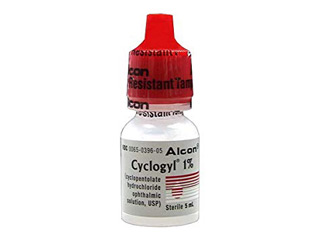
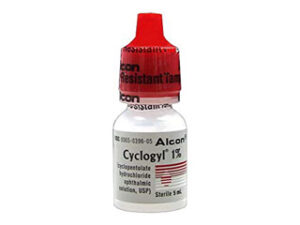
Cyclogyl (Cyclopentolate) Eye Drops – Patient Information (Australia)
Cyclogyl is a brand of cyclopentolate, an eye medicine used to temporarily widen (dilate) the pupils and relax the focusing muscle in the eye. It is commonly used during eye examinations and procedures to help an eye-care professional see the inside of the eye more clearly.
This guide explains how Cyclogyl works, what to expect, typical uses and timing, safety information, and practical tips. It is written for people in Australia considering this medicine from an online pharmacy.
Key Product Information
| Item | Details |
|---|---|
| Medicine | Cyclogyl (cyclopentolate) eye drops |
| Therapeutic use | Mydriatic (pupil dilation) and cycloplegic (paralyses accommodation) |
| Common settings | Eye examinations, refraction testing, retinal/optic nerve viewing |
| How it works | Antimuscarinic (blocks muscarinic receptors) in the eye |
| Typical onset | Often within 20–60 minutes |
| Typical duration | May last several hours; in some people (especially children) longer |
| Availability | Availability and restrictions can vary by strength and formulation |
How Cyclogyl Works (Mechanism of Action)
Cyclopentolate belongs to a group of medicines called antimuscarinics or anticholinergics. In the eye, it works by:
- Dilating the pupil (mydriasis): It relaxes the pupil constrictor muscle, allowing the pupil to become larger.
- Paralysing accommodation (cycloplegia): It temporarily inhibits the focusing mechanism (ciliary muscle), helping to obtain more accurate measurements of refractive error.
Because the effect is temporary, vision usually improves after the medicine wears off. The time course can vary between individuals.
Pharmacokinetics (What the Body Does With It)
After Cyclogyl eye drops are applied, cyclopentolate acts mainly within the eye. Some amount may be absorbed into the bloodstream, and the extent can differ by age, dose, and individual factors.
- Absorption: Eye drops can be absorbed through the conjunctival tissues and via the nasolacrimal drainage system (the tear drainage pathway).
- Distribution: Once absorbed, it may reach systemic circulation. Children may be more sensitive to systemic absorption due to body size.
- Metabolism and elimination: Like many anticholinergic agents, cyclopentolate is metabolised and cleared primarily by hepatic and renal pathways.
- Clinical implication: Systemic effects are uncommon when used correctly, but they are more likely in children or if excessive dosing occurs.
Tip: To reduce systemic absorption, many clinicians advise using punctal occlusion (gentle pressure over the inner corner of the eye) for a short period after drop instillation.
Typical Uses in Eye Care
Cyclogyl is used to support procedures that require clear viewing of the retina and to ensure accurate focusing measurements:
- Eye examinations: To help clinicians inspect the retina, optic nerve, and internal eye structures.
- Refraction testing: Cycloplegia helps determine prescription needs by reducing the eye’s ability to change focus.
- Paediatric visual assessments: Often used when reliable refraction is needed in children.
- Diagnostic procedures: Where mydriasis/cycloplegia are required.
When to Use It and What Timing to Expect
Your eye-care professional will advise the exact dosing and timing for your situation. However, typical experiences after Cyclogyl include:
- Onset: pupil dilation and reduced focusing ability may begin within about 20–60 minutes.
- Peak effect: often occurs within the first hour.
- Duration: effects may last several hours; in some people it can extend longer, particularly in children or with higher doses.
Planning tips:
- If your pupil is dilated, you may have blurred near vision and light sensitivity.
- Avoid driving until vision is clear and safe.
- Bring sunglasses for glare reduction.
Indications (Why Cyclogyl Is Used)
In clinical practice, cyclopentolate eye drops are indicated for:
- Mydriasis (pupil dilation) for eye examinations and diagnostics.
- Cycloplegia (temporary paralysis of accommodation) for accurate assessment of refractive error, including in children.
It may not be suitable for everyone, particularly people at risk of certain eye conditions (see “Safety Profile” below).
Dosing Information (General Guidance)
Important: The dose and number of drops depend on the reason for use, the concentration of the product, and the patient’s age and response. Always follow the instructions provided by your eye-care professional.
Because Cyclogyl products can vary by strength and local prescribing practices, the most appropriate dosing details for your specific product will be given by your clinician. Common patterns include:
- Adults: Typically a small number of drops in the affected eye(s), with timing intervals to achieve the desired dilation.
- Children: Dosing is carefully tailored due to higher sensitivity to systemic anticholinergic effects.
How to use the drops:
- Wash hands.
- Check the bottle and ensure the dropper tip is clean and not damaged.
- Gently pull down the lower eyelid and place the prescribed number of drops into the lower conjunctival sac.
- Close the eye gently.
- For systemic absorption reduction: press lightly on the inner corner of the eye (near the nose) for about 1–2 minutes after dosing.
- Wipe away excess with a clean tissue.
Food Interactions
Cyclogyl is applied to the eye and primarily acts locally. For most people, there are no direct food interactions expected.
- However, if you are fasting or have a planned procedure, follow the instructions given by your healthcare team.
- If cyclopentolate causes mild dryness or blurred vision, take care with meals until your vision stabilises.
Alcohol and Medicine Interactions
Alcohol
Systemic absorption from properly used eye drops is usually low, so alcohol interactions are not commonly a major concern. Still, because cyclopentolate can cause blurred vision or light sensitivity and may rarely cause systemic anticholinergic effects, it’s sensible to:
- Limit alcohol on the day of use, especially if you need to stay alert or drive.
- Avoid activities requiring clear vision until effects wear off.
Medicine Interactions
Cyclopentolate’s main concern is its anticholinergic activity. Interactions are most relevant when a person is taking other medicines that can also have anticholinergic effects.
Tell your eye-care professional or pharmacist if you use:
- Other anticholinergic medications (some medicines for bladder overactivity, motion sickness, some allergies, or certain mental health medications)
- Medicines that affect pupil size or eye pressure
- Any medicines used for glaucoma or history of eye pressure problems
- Medicines that may increase sensitivity to anticholinergic effects
When multiple eye medicines are used, spacing between drops may be recommended to avoid dilution and to improve effectiveness.
Safety Profile: Side Effects and Warnings
Most people tolerate Cyclogyl well when used as directed. Side effects are typically related to pupil dilation/cycloplegia or, less commonly, anticholinergic effects.
Common or expected effects
- Light sensitivity (photophobia)
- Blurred vision, especially at near range
- Temporary difficulty focusing
- Dryness or mild discomfort in the eye
Less common effects
- Eye redness
- Headache or dizziness (especially after significant dilation)
- Discomfort from the feeling of “wide/open” pupils
Seek urgent medical help if you notice
Although uncommon, cyclopentolate can precipitate dangerous eye conditions in susceptible people. Contact urgent medical care or your eye service if you develop:
- Severe eye pain
- Marked redness
- Significant headache with nausea/vomiting
- Vision changes that worsen rather than improve
- Halos around lights with pain
Who should be extra cautious
Cyclogyl may be unsuitable or require special precautions if you have:
- History of narrow-angle glaucoma or risk of angle closure
- Eye conditions affecting drainage of fluid
- Known sensitivity to anticholinergic medicines
- Children who may be more vulnerable to systemic side effects
Pregnancy and breastfeeding: Cyclopentolate is used for eye examinations. Discuss individual risk/benefit with a healthcare professional if you are pregnant or breastfeeding.
Practical Use Tips (Getting the Best and Safest Result)
- Use sunglasses: Dilated pupils often make sunlight uncomfortable.
- Plan for near work: Reading, phones, and screens may be difficult until vision returns.
- Avoid driving: If you’re dilated, your depth perception and focusing ability may be reduced.
- Reduce systemic absorption: gentle pressure on the inner eye corner for 1–2 minutes after each dose.
- Keep drops organised: Wait the advised interval between drops if more than one dose is prescribed.
- Don’t touch the eye with the tip: Prevent contamination and injury.
- Contact lenses: If you wear contact lenses, ask your clinician whether you should remove them before using Cyclogyl. Many eye drops require removal and lens-free time afterward.
Alternative Options (Depending on the Eye Care Goal)
Clinicians may use different cycloplegic or mydriatic agents depending on the patient, age, and diagnostic needs. Alternatives can include:
- Other cycloplegic eye drops (used to relax accommodation for refraction testing)
- Other mydriatic agents (used to dilate the pupil for examinations)
- Non-pharmacological approaches for some assessments (where appropriate)
Which option is best depends on your medical history, age, and the specific examination. Your eye-care professional can advise the most suitable agent and dosing strategy.
Australia: Market and Legal Context (What You May Need to Know)
In Australia, supply and access to medicines depends on the product category and regulatory status (for example, whether a medicine is prescription-only, pharmacist-only, or available under particular conditions). Online availability can vary by formulation strength and packaging.
- Follow local requirements: Some eye drops may require assessment by a pharmacist or healthcare provider.
- Product labelling matters: Always check that the bottle matches the intended strength and formulation.
- Use only as directed: Incorrect dosing can increase side effects.
Recent guidance: Eye-care safety advice and prescribing practices can evolve over time, particularly around paediatric dosing and angle-closure risk screening. Your clinician or pharmacist can confirm the most current local approach for your situation.
Delivery and Availability (Online Pharmacy Considerations)
Availability of Cyclogyl eye drops can vary by supplier and product strength. When ordering online in Australia, you can typically expect:
- Availability checks: Some items may be listed as “in stock,” “limited stock,” or “pre-order.”
- Cold chain: Most eye drops do not require freezing, but always store according to the label (often room temperature). If storage requirements are specified, follow them.
- Postage and tracking: Many pharmacies provide tracking and estimated delivery times within Australia.
- Expiry date: Check the expiry date on arrival before use.
For the most accurate availability and delivery options, refer to the product listing on your selected online pharmacy.
FAQ: Frequently Asked Questions
1) How long will Cyclogyl make my pupils stay dilated?
In many people, the effect lasts for several hours. The exact duration varies by person and by dose. Children often experience longer-lasting cycloplegia and blurred vision.
2) Will Cyclogyl affect my ability to drive?
Yes. Dilated pupils and reduced focusing ability can impair vision and depth perception. Avoid driving until your vision returns to normal and it is safe to do so.
3) Can I read or use my phone after using Cyclogyl?
Near vision is often blurred while the medicine is working. Reading, texting, and other close-up tasks may be uncomfortable until the effect wears off.
4) What should I do if I accidentally put in too many drops?
Contact your pharmacist or an eye-care service for advice. If you notice troubling symptoms (such as severe eye pain, worsening vision, headache with nausea/vomiting), seek urgent medical care.
5) Are there signs of an allergic reaction?
Allergic reactions can occur with any medicine, though they are not the most common outcome. Seek medical advice promptly if you develop swelling, rash, hives, or breathing difficulties.
6) Can Cyclogyl be used with other eye drops?
Often yes, but the spacing between products matters. Ask your pharmacist or clinician how long to wait between different eye drops to prevent dilution and ensure each medicine works properly.
7) Does Cyclogyl have interactions with my medicines?
It may interact with medicines that have anticholinergic effects or those that affect eye pressure. If you take regular medications, discuss them with your pharmacist or eye-care provider.
8) What if I wear contact lenses?
Contact lens use may need to be paused depending on the product and the timing of your exam. Ask your eye-care professional for specific instructions.
9) Can children use Cyclogyl?
Yes, it is commonly used in paediatric eye examinations, but dosing is carefully tailored due to greater sensitivity to systemic anticholinergic effects. Use only under guidance from an eye-care professional.
10) What should I do after the eye drops wear off?
Once vision returns, you can resume normal activities. If you have concerns that symptoms last longer than expected or worsen, contact your eye-care provider.
Summary
Cyclogyl (cyclopentolate) eye drops temporarily dilate pupils and relax focusing in the eye. This helps clinicians perform accurate eye examinations and refraction testing. Effects usually begin within about an hour and can last several hours, so plan for blurred near vision and light sensitivity. Most people tolerate Cyclogyl well, but it may be unsuitable for people at risk of certain eye conditions such as angle-closure glaucoma. If you experience severe eye pain, significant redness, headache with nausea/vomiting, or worsening vision, seek urgent medical help.
If you have questions about Cyclogyl availability, delivery, or safe use with your other medicines, a pharmacist can help you confirm the safest approach for your needs.